


 647-243-4512
 Book Now
Why Dust Builds Up in Your Home
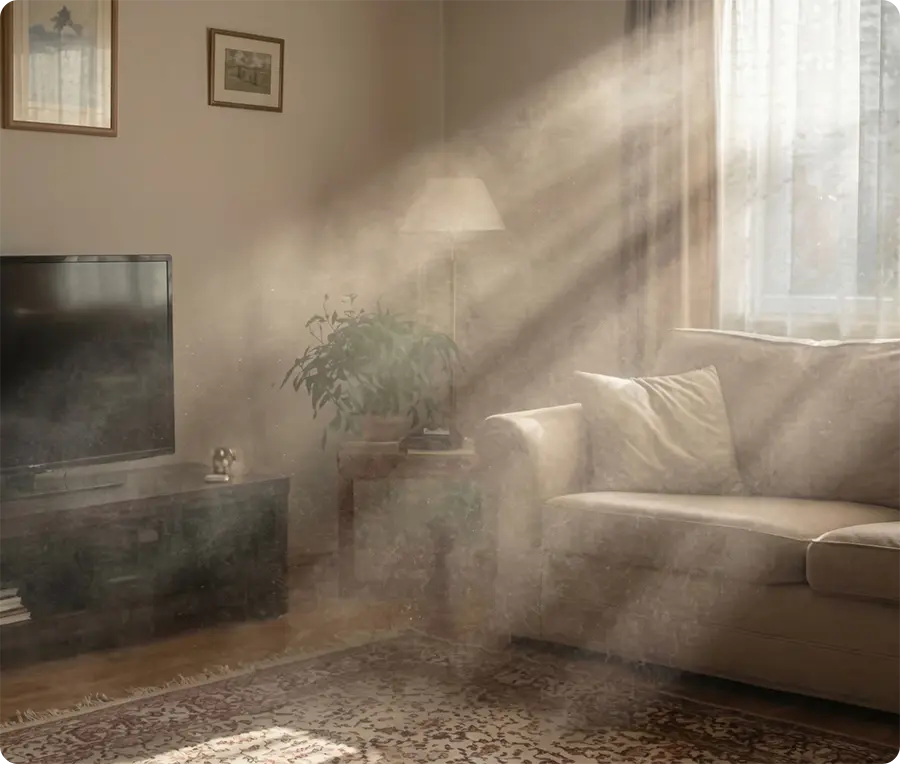
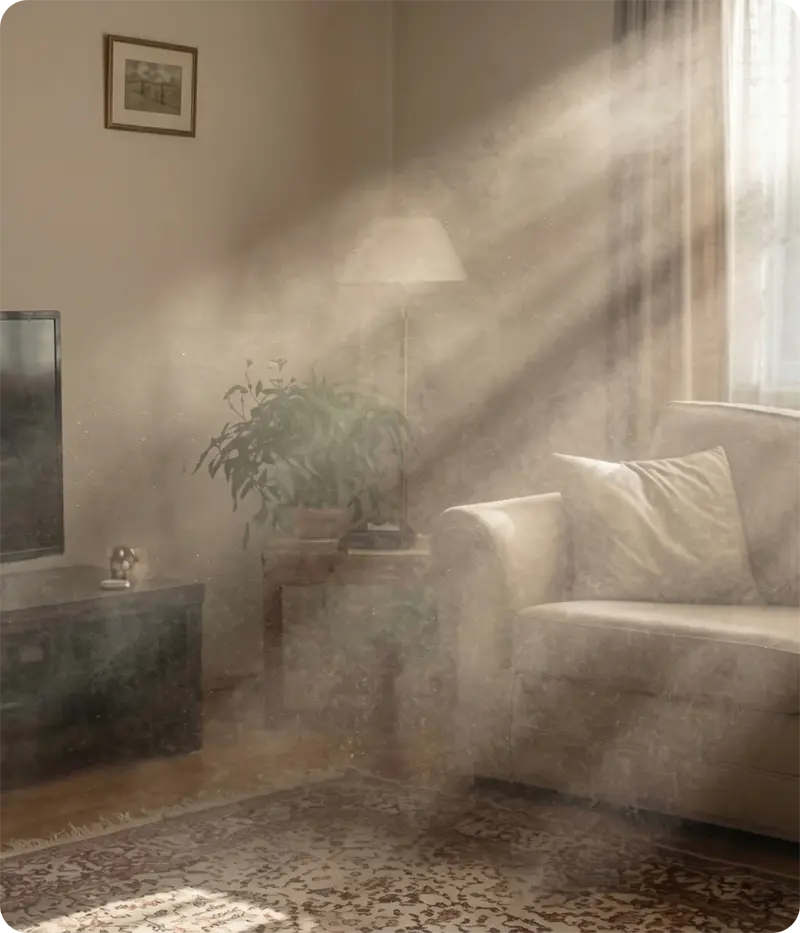
Understanding where dust comes from helps you manage dust more effectively. Dust accumulation happens when airborne dust, fine particles, and other contaminants settle on surfaces over time.
Dust builds from sources like loose fur, skin cells, dirt, and debris entering through the front door or windows. Without regular cleaning and proper air filtration, dust builds up quickly and can trigger allergies and reduce air quality.
Step-by-Step Guide to Reduce Dust in Your Home
Reducing dust in your home requires a consistent and structured approach. These steps focus on controlling airborne dust, removing buildup from surfaces, and improving indoor air quality across your space.
1. Improve Air Filtration to Reduce Dust
Air filtration plays a major role in controlling airborne dust and improving indoor air quality. Without proper filtration, dust particles continue to circulate throughout your home.
Change air filters regularly and upgrade to high-quality Heating, Ventilation, and Air Conditioning (HVAC) filters or a true HEPA filter. Using a High-Efficiency Particulate Air (HEPA) air purifier helps trap particles like dust mites, pet dander, and other allergens, reducing dust mite exposure and improving overall air quality.
2. Clean Surfaces Properly to Remove Dust
Proper cleaning techniques help trap dust instead of spreading it around. Using the wrong tools can cause dust to become airborne again.
Use a damp microfiber cloth or damp cloth to wipe surfaces. Microfiber cloths trap particles instead of pushing them into the air like feather dusters.
Focus on areas where visible dust collects, such as light fixtures, ceiling fans, and window screens. A wet cloth helps capture fine particles and prevents dust from spreading.
3. Vacuum Regularly to Control Dust Accumulation
Regular vacuuming is essential to reduce dust accumulation in your home. Dust collects in carpets, rugs, and high traffic areas where dirt and debris settle.
Vacuum carpets and hard floors using a vacuum with a HEPA filter. This helps remove dust, pet hair, and other allergens that contribute to dust buildup.
Pay close attention to living rooms, furniture, and areas where fabric fibers collect. Vacuum regularly to maintain cleaner surfaces.
4. Manage Dust From Fabrics and Soft Surfaces
Fabrics in your home are a major source of dust and dust mites. Items like pillow covers, curtains, and upholstery collect dust particles and pet hair over time.
Use washable covers and wash them in hot water to eliminate dust mites and reduce dust mite exposure. Fabric softener can help reduce static, which attracts dust.
Deep clean soft surfaces regularly to remove dust and other allergens. This helps reduce dust allergies and keeps your home more comfortable.
5. Reduce Dust From Pets and Daily Activity
Pets contribute significantly to household dust through pet dander, loose fur, and dirt. Daily activities also introduce airborne dust and other particles into your home.
Groom pets regularly to reduce pet hair and dander. Managing these sources helps prevent dust buildup and improves indoor air quality.
Keep windows closed during high pollen or dust conditions, and use exhaust fans to improve air circulation. Bringing in fresh air strategically can help reduce airborne dust.
6. Maintain Your Home to Prevent Dust Buildup
Home maintenance plays a key role in preventing dust from accumulating. Dust settles in neglected areas and poorly maintained systems.
Clean air ducts and replace furnace filters regularly to reduce dust circulating through your HVAC system. Keep window screens clean and ensure entry points like the front door are sealed properly.
Regular maintenance helps eliminate dust and improve long-term air quality.
7. Build a Consistent Cleaning Routine
Consistency is key when trying to manage dust effectively. Without regular cleaning, dust builds up quickly and becomes harder to control.
Create a routine that includes vacuuming regularly, wiping surfaces with a damp cloth, and maintaining air filters. Using the right tools and techniques helps reduce dust accumulation.
When to Consider Professional Cleaning
Sometimes dust buildup becomes difficult to manage with regular cleaning alone. Deep cleaning helps remove dust from hard to reach areas and improves overall cleanliness.
Professional cleaning services help reduce long-term dust buildup by thoroughly cleaning high-impact areas that contribute most to indoor air quality issues. This is especially helpful for homes with pets, dust allergies, or heavy dust accumulation.
Create a Cleaner, Dust Free Home
Reducing dust in your home requires a combination of proper cleaning, air filtration, and maintenance. Addressing dust at the source helps prevent buildup and keeps your space healthier.
By using air purifiers, cleaning regularly, and managing dust sources, you can get rid of dust and maintain a dust free home. Small changes in your routine can make a big difference in your overall air quality.


